


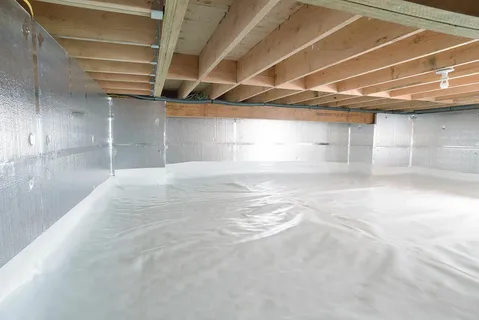
Hidden beneath a home’s living space, the crawl space quietly influences how floors feel and how long the structure lasts. Moisture problems in this area often develop without warning, slowly affecting the wood that supports everything above it. Understanding how crawl space waterproofing near me protects floor joists and subfloors helps explain why this work matters long before visible damage appears.
Keeps Wood from Soaking up Ground Moisture over Time
Wood naturally absorbs moisture from the air and surrounding soil. In a crawl space without proper waterproofing, bare earth and damp conditions allow moisture vapor to rise and settle into floor joists and subfloor panels. Over months, that moisture changes the internal structure of the wood, making it heavier and less stable even if no standing water is present. Waterproofing systems interrupt this process by sealing the ground and controlling vapor movement. By limiting moisture contact at the source, wood components remain closer to their original moisture content. This protection is often one of the first steps recommended by crawl space repair contractors when addressing long-term structural health.
Stops Prolonged Dampness That Weakens Support Beams
Constant dampness is more damaging than short-term exposure. Support beams that stay moist for extended periods lose their strength as wood fibers soften and compress. This weakening does not happen overnight, which makes it easy to overlook until floors begin to feel uneven or bouncy.
Effective crawl space repair near me focuses on drying the environment and keeping it dry. Waterproofing methods reduce humidity levels so beams can remain firm and load-bearing. In areas like crawl space repair Huntsville AL, where seasonal moisture is common, controlling prolonged dampness protects the backbone of the home.
Reduces Swelling That Causes Floor Boards to Warp
Wood expands when it absorbs moisture. In crawl spaces, this expansion pushes upward into the subfloor and floor boards, leading to cupping, buckling, or uneven seams. These changes may appear as cosmetic issues at first but often signal deeper moisture problems below.
Waterproofing stabilizes moisture levels so wood remains dimensionally consistent. Once swelling is reduced, floors are less likely to shift or warp during humid months. This is especially important in homes where flooring materials are sensitive to even small moisture changes.
Blocks Water Intrusion That Invites Fungal Decay
Water intrusion from heavy rain, poor drainage, or foundation gaps creates ideal conditions for fungal growth. Fungi feed on damp wood, breaking it down from the inside out. Early decay may not be visible, yet it steadily compromises joists and subfloors. Crawl space waterproofing near me addresses these entry points by redirecting water away and sealing vulnerable areas. Blocking intrusion removes the moisture fungi need to survive, slowing decay before it reaches advanced stages. Many crawl space repair contractors consider this preventive step essential for preserving structural wood.
Prevents Shifting Soil from Undermining Structural Wood
Soil beneath a crawl space can shift as moisture levels change. Wet soil expands, while dry soil contracts, creating movement that affects piers and supports. This movement transfers stress into floor joists, sometimes causing cracks or misalignment.
Waterproofing helps maintain consistent soil conditions by managing groundwater and surface runoff. Stable soil reduces uneven pressure on structural wood, helping joists remain properly supported. Over time, this stability plays a major role in preventing structural settling.
Shields Subfloor from Repeated Wet/Dry Stress Cycles
Repeated cycles of wetting and drying are hard on wood. Each cycle causes expansion and contraction, gradually weakening fasteners and joints within the subfloor. Even high-quality materials can degrade under constant stress.
By keeping moisture levels consistent, waterproofing shields the subfloor from these cycles. This protection allows adhesives, nails, and joints to perform as intended for longer periods. Homes that invest in crawl space repair near me often see fewer flooring issues tied to moisture fatigue.
Limits Airborne Moisture That Accelerates Wood Breakdown
Moist air can be just as harmful as direct water contact. High humidity in crawl spaces allows airborne moisture to cling to wood surfaces, accelerating breakdown even without visible leaks. This type of exposure often goes unnoticed during routine inspections.
Encapsulation and waterproofing systems reduce humidity by sealing and conditioning the crawl space air. Lower moisture levels slow chemical and biological processes that weaken wood. In regions served by crawl space repair Huntsville AL specialists, controlling airborne moisture is a key factor in long-term durability.
Keeps Metal Fasteners from Rusting and Loosening
Joists and subfloors rely on metal fasteners for strength. In damp crawl spaces, nails, bolts, and brackets corrode over time. Rust weakens these connections, allowing wood members to shift or separate under normal loads.
Waterproofing reduces corrosion by limiting moisture exposure. As fasteners remain intact, structural connections stay tight and secure. This often prevents secondary repairs that can arise when metal components fail before the wood itself shows damage.
Helps Maintain Straight, Level Floor Surfaces for Long Lives
Uneven floors are often the result of long-term moisture problems below. As joists weaken, swell, or shift, the floor above reflects those changes. Homeowners may notice sloping, sagging, or soft spots that worsen gradually. By protecting joists and subfloors from moisture-related damage, crawl space waterproofing supports level floor surfaces for decades. The combined benefits of stable wood, secure fasteners, and controlled humidity extend the usable life of the entire flooring system.
For properties experiencing moisture concerns, Kennedy and Sons can evaluate crawl space conditions, identify moisture sources, and provide waterproofing and repair solutions designed to protect floor joists and subfloors from long-term damage.
